
How to Choose the Right MS or PhD Advisor
August 24, 2024
One of the most important decisions you’ll make during your graduate school journey is choosing the right advisor. While selecting the labs to apply to is critical during the application process, deciding on the right advisor after you’re accepted can significantly impact your grad school experience and early career.
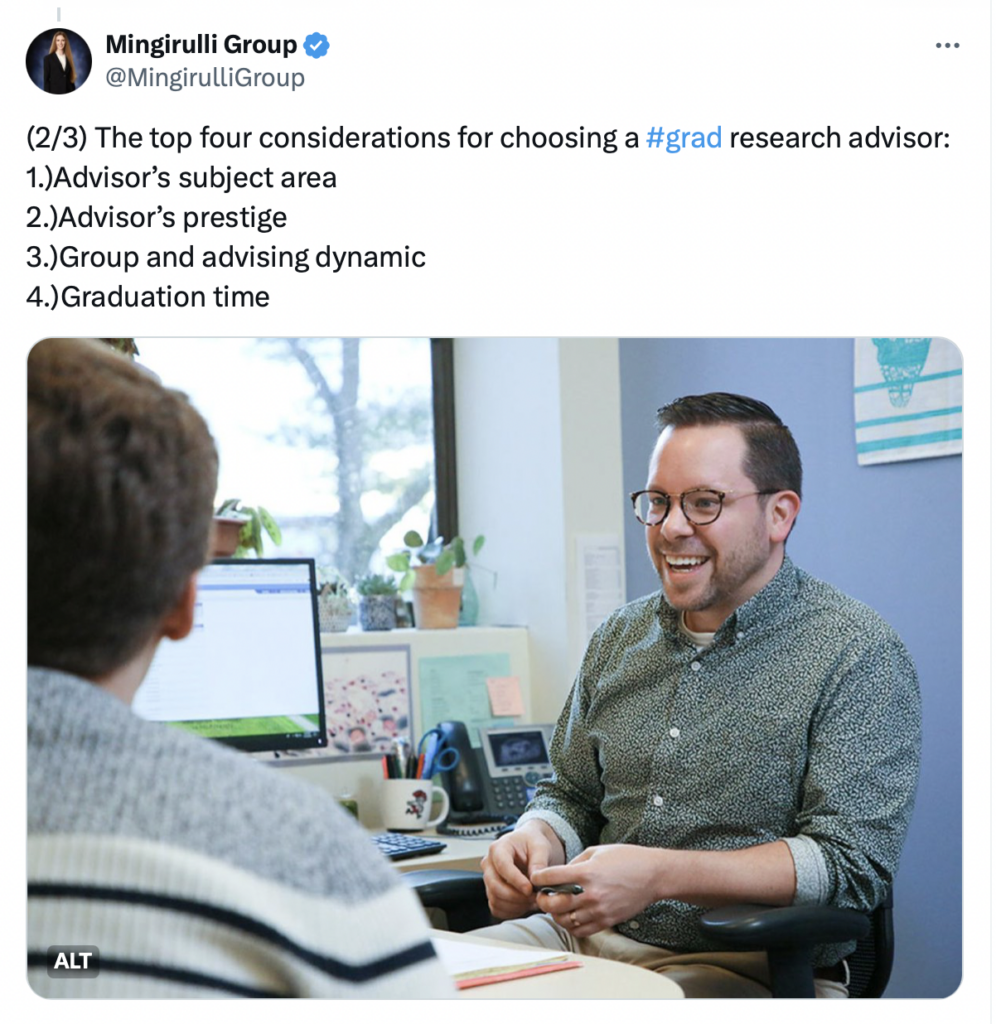
There are four key aspects to choosing an advisor:
Advisor’s Subject Area
It may seem obvious, but aligning your interests with your future advisor’s research area is crucial. However, expectations and reality can differ greatly between what prospective students think they will research versus what they will actually research.
You may join a lab with a specific research idea in mind and later find that you’re the only one studying that niche. While some students thrive in this environment, it comes with challenges. It’s helpful to be aware of this before joining the lab.
Other students enter a lab believing they’ll study a general area but are directed to research something different that they’re less interested in. However, if you aren’t genuinely interested in your research topic, you will likely burnout and not finish the PhD program. It’s important to have these discussions with your future advisor before signing on the dotted line.

Advisor’s Prestige
Your graduate advisor likely matters more to your future employer than your program itself. As a PhD student, you’re delving into a niche topic, and the first thing those versed in the subject matter should ask is, “Who was your advisor?” Studying under a well-known advisor is key to future job opportunities for PhD students as well as MS students involved in research, particularly if you plan to stay in the same field after graduation. Advisors with strong industry connections can be invaluable in helping you land your first job. Your advisor’s standing within your field is vital to helping you in the early stages of your career.
Lab and Advising Dynamic
You’ll be spending several years with your lab, so the lab and advising dynamic will significantly impact your daily life and overall well-being. Your labmates, or lack thereof, can potentially make or break you. Much like coworkers in a full-time job, labmates are very important.
The advising dynamic is also a crucial consideration. Do you prefer a hands-on or hands-off advising approach? Would you rather report directly to your advisor or work closely with a lab manager or post-doc? Do you want a greater say in the research topic you do? What kind of personal relationship do you want with your advisor? Understanding your preferences and finding a lab that aligns with them is essential.

Graduation Timeline
Last but not least, your anticipated graduation timeline should be a key topic of discussion with your potential advisor. You likely have a timeline in mind, and it’s important to be open about that from the start. While research is rarely predictable and can deviate drastically from the original timeline (think COVID), having a mutual understanding of how long your degree should take is important.
By considering these four factors, you can increase your chances of finding an advisor who is right for you.